Don’t wait. Call 804-541-2622 today!

HVAC Articles & News

What Maintenance Is Required for a Heat Pump?

Your heat pump works harder than most home systems. A furnace gets to rest all summer and an air conditioner sits idle through winter, but your heat pump runs in every season, so it needs steady care to keep doing its job well.

The good news is that a lot of that care is simple, and some of it you can handle yourself. The rest is worth leaving to a technician once or twice a year.

In this article, we walk through the maintenance a heat pump needs to run efficiently and last. You’ll learn what you can do on your own, what a professional should handle, and when to schedule service so your system is ready for both seasons.

What You Can Take Care of Yourself

A handful of easy tasks make a real difference, and none of them call for a technician.

  • Change or clean the air filter every one to three months, and monthly if you have pets or allergies
  • Keep at least two feet of clear space around the outdoor unit
  • Clear away leaves, grass clippings, and debris that collect in and around the unit
  • Rinse the outdoor coils gently with a hose to wash off dust and pollen
  • In winter, keep snow and ice off the unit and make sure it is not sitting in a puddle
  • Check that your vents inside are open and not blocked by furniture or rugs

Stay on top of those, and you prevent a good share of the problems that send people looking for a repair. The filter especially earns your attention, since a clogged one strains the whole system and drags down its efficiency in a hurry.

What a Professional Should Handle

A trained technician checks the parts and readings you cannot safely reach on your own. Some of a heat pump’s most important maintenance happens where a homeowner should not go.

During a professional visit, a technician measures the refrigerant charge, since a heat pump that is low will struggle to heat or cool and can damage its compressor over time. They clean the coils properly, test the defrost cycle that keeps your outdoor unit from icing over in winter, and check the reversing valve that lets the system switch between heating and cooling. They also inspect the electrical connections, lubricate the moving parts, and confirm the system is moving air the way it should. These are the checks that keep a small issue from quietly growing into a breakdown.

When to Schedule Service

Plan on professional maintenance twice a year, once before summer and once before winter. Because your heat pump carries both jobs, it deserves a checkup ahead of each demanding season. A spring visit gets it ready for the cooling months, and a fall visit prepares it for the heating months and confirms that the defrost cycle is working before the first freeze. If two visits a year is not realistic, at least get one, and do not let a full year pass without a technician looking it over. A typical tune-up runs somewhere around $70 to $200 nationally, which is minor next to the cost of an early failure.

Signs Your Heat Pump Needs a Look

A few warning signs mean it is worth calling before your next scheduled visit rather than waiting.

  • Ice that builds up and will not clear, which usually points to low refrigerant, airflow trouble, or a failing defrost cycle
  • Air that comes out lukewarm when it should be warm or cool, a sign the system is struggling to do its main job
  • Weak airflow from the vents, often a clogged filter but sometimes a blower or duct problem
  • Short cycling, where the system switches on and off more often than it used to and wears itself down doing it
  • Energy bills climbing for no clear reason, which tends to mean the system is working harder than it should
  • New grinding, rattling, or buzzing sounds, since a heat pump should run fairly quietly

Give Us a Call Today

The team at Armstrong Mechanical Services has kept Richmond and Hopewell homes comfortable for years, and we are glad to help you keep your heat pump running through every season. Contact us at 804-541-2622 to set up a tune-up or ask about a maintenance plan that fits your home.

Frequently Asked Questions About Heat Pumps

What maintenance is required for a heat pump?

A heat pump needs a clean filter every one to three months, a clear outdoor unit, and professional service twice a year. The homeowner handles the filter and the area around the unit, while a technician checks the refrigerant, coils, defrost cycle, and electrical parts.

How often should a heat pump be serviced?

Twice a year is ideal for a heat pump, once before the cooling season and once before the heating season, since it runs all year. If you can only manage one visit, do not let a full year go by without it.

How often should I change my heat pump filter?

Every one to three months for most homes, and monthly if you have pets or allergies. A clogged filter strains the system and lowers its efficiency, so it is worth checking monthly either way.

Can I do heat pump maintenance myself?

You can handle the basics, like changing the filter, keeping the outdoor unit clear, and rinsing the coils. Deeper tasks such as checking refrigerant and testing the defrost cycle should be left to a trained technician.

Why is my heat pump freezing up in winter?

Some frost on the unit is normal in cold weather, and the defrost cycle should melt it off on its own. What is not normal is ice that sticks around or keeps building up. That usually means low refrigerant, poor airflow, or a defrost cycle that is not doing its job, and it is worth a call before the problem grows.
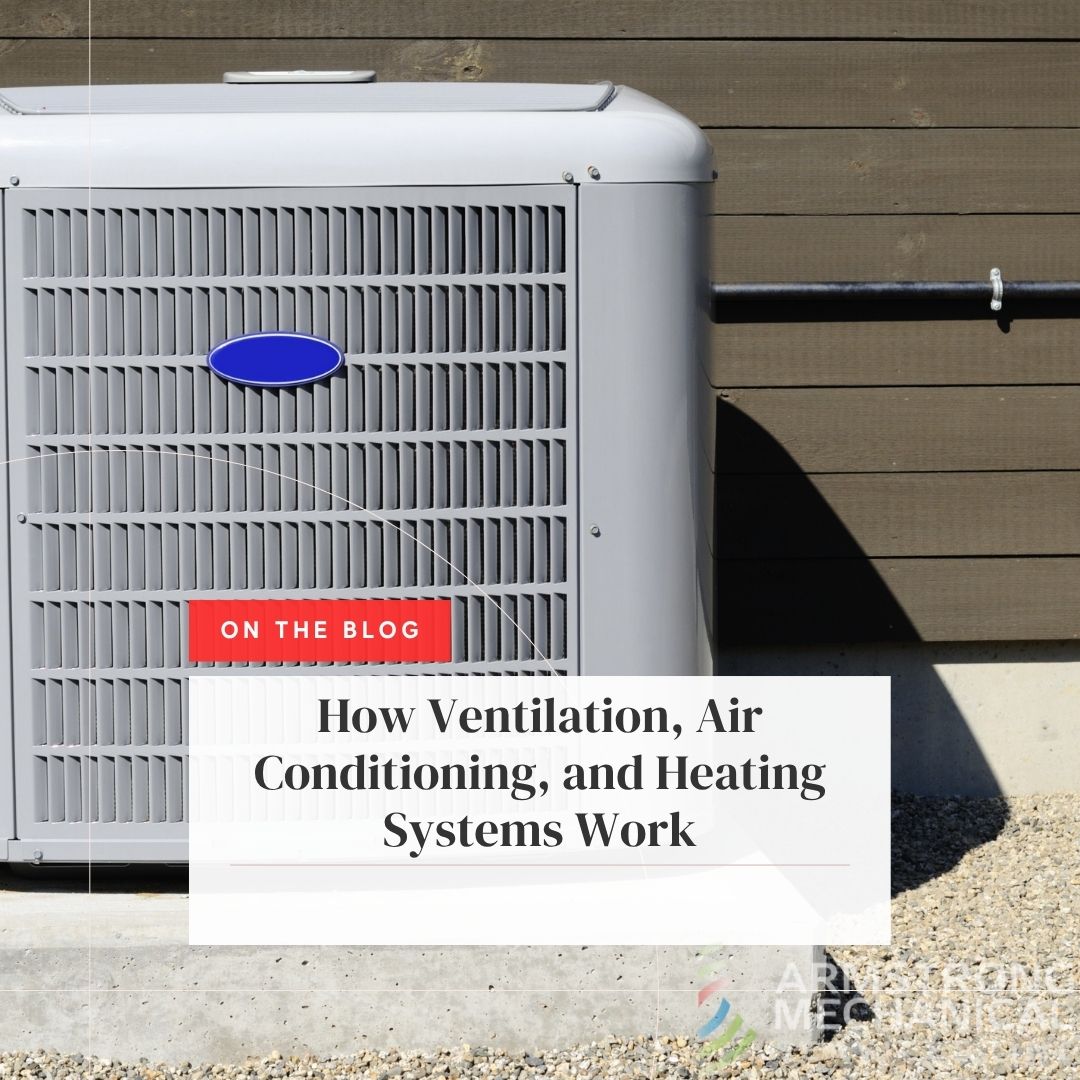
How Ventilation, Air Conditioning, and Heating Systems Work

Your HVAC system runs quietly in the background of daily life, warming the house in January and cooling it in July, and most people never think about how it pulls that off. A basic grasp of how it works helps you spot trouble early, ask better questions, and get more out of the equipment you already own.

In this article, we break down how your home’s heating, ventilation, and air conditioning work together as one system. You’ll learn what the main parts do, how your home heats and cools, and why airflow ties the whole thing together.

What Does HVAC Actually Mean?

HVAC stands for heating, ventilation, and air conditioning, three separate jobs handled by one connected system.

Each letter is doing real work. The heating side warms your home through the cold months. Ventilation, the part most people forget, is the steady movement of air that filters out dust, manages moisture, and keeps each room comfortable. And the air conditioning side cools things down once summer arrives. Nearly every home runs all three through a shared set of parts, which is why trouble in one area so often shows up in another.

How Your Home Heats Up

Heating works by creating or gathering warmth and then pushing it through your home with moving air. There are two main types to know. A furnace burns natural gas or uses electric heating elements to warm the air, and a blower then sends that warm air through the ducts and out your vents. A heat pump goes about it differently, and it is worth understanding, because it does not create heat so much as relocate it. Even cold outdoor air holds some warmth, and a heat pump pulls that warmth inside. When summer comes, it runs the same process in reverse to cool the house, so a single unit covers both seasons.

How Your Home Cools Down

Air conditioning cools your home by pulling heat out of the indoor air rather than adding anything cold. It often surprises people that an AC does not make cold air at all. It removes the heat from the air already in your house and moves it outside.

A substance called refrigerant travels in a loop between your indoor and outdoor units, soaking up heat inside and releasing it outdoors. The compressor in the outdoor unit drives that loop, which is exactly why it is the most expensive part to replace. That cycle repeats until your home settles at the temperature you set. It is the same idea as your refrigerator, just scaled up to cool a whole house.

How Does Air Move Through Your Home?

Your system depends on steady airflow to carry heated or cooled air into every room and pull stale air back to be cleaned. All the heating and cooling in the world means nothing if the air cannot reach your rooms.

That is the ventilation side, and it runs on a few important parts. The blower, sometimes called the air handler, moves the air. The ductwork carries it where it needs to go.

Return vents pull air back to be conditioned again, and the filter cleans it along the way. When airflow drops, the whole system has to strain, which is how something as minor as a clogged filter throws everything off.

How Your Thermostat Controls Everything

The thermostat is the control center that tells your system when to heat, when to cool, and when to rest. Everything starts here. Once the room drifts away from the temperature you set, the thermostat signals the system to switch on, then shuts it back down when the house catches up. A programmable or smart thermostat can manage that on a schedule, which quietly trims your energy use without you doing a thing.

The Main Parts Of Your System

A handful of core components do most of the work in nearly every home system.

  • Furnace or heat pump for heating
  • Air conditioner or heat pump for cooling
  • Blower or air handler that moves the air
  • Ductwork that carries air to each room
  • Thermostat that controls it all
  • Air filter that keeps the air clean

These parts lean on each other, so when one starts to fail, the trouble rarely stays put. Weak airflow, uneven temperatures, or a new sound can all trace back to a single worn component.

Put This Knowledge to Work

The payoff for understanding your system is that you notice trouble sooner. A vent that suddenly blows weak, a filter you now know to check, an outdoor unit that should be humming but has gone silent. Those are the early signs that separate a quick fix from a major repair, and now you know where to look for them. Pair that with a yearly tune-up and a fresh filter, and you keep small problems from ever growing into big ones.

Have a Question About Your System? Give Us a Call

The team at Armstrong Mechanical Services has spent years keeping Richmond and Hopewell homes comfortable, and we are always glad to help a homeowner make sense of what their system is doing. Contact us at 804-541-2622 with a question, a concern, or a system that is not behaving.

Frequently Asked Questions

How does an HVAC system work?

An HVAC system heats, cools, and circulates the air in your home using a connected set of parts. A furnace or heat pump handles heating, an air conditioner or heat pump handles cooling, and a blower with ductwork moves that conditioned air through your rooms.

What are the main parts of an HVAC system?

The core parts are the furnace or heat pump, the air conditioner, the blower or air handler, the ductwork, the thermostat, and the air filter. Each has its own role, and the system depends on all of them working together.

What is the difference between a furnace and a heat pump?

A furnace creates heat by burning gas or using electric elements. A heat pump moves existing heat from one place to another, and it can run in reverse to cool your home in summer, so it covers both jobs.

Does air conditioning actually make cold air?

No. Your air conditioner removes heat from the air already inside your home and releases it outdoors, which leaves the indoor air cooler. It takes heat away rather than adding cold.

Why is airflow so important?

Airflow carries the heated or cooled air to your rooms and pulls stale air back to be filtered. When it drops, often from a dirty filter or blocked vents, the whole system works harder and heats or cools less evenly.

How Often Should My HVAC Be Serviced?

Most people think about their HVAC system on the day it stops working, which is the worst possible day to think about it.

For most homes, the answer is twice a year. Your system handles two jobs, cooling in summer and heating in winter, and each deserves a checkup before its season arrives. A spring visit for the air conditioning, a fall visit for the heat. If two visits are not realistic, one beats none, but try not to let a full year pass with nobody looking things over.

What Does an HVAC Visit Cover?

The spring tune-up gets your air conditioning ready before the Richmond heat sets in. A technician cleans the coils, checks your refrigerant, tests the electrical connections, and makes sure the system is moving air the way it should. The idea is to catch small problems while the weather is still mild, so a repair happens on your schedule instead of during the first heat wave of July.

The fall visit does the same for your furnace or heat pump, and this one matters most for safety. Along with the usual once-over, the technician inspects the burners, tests the ignition, and checks a gas furnace for cracks that could leak carbon monoxide into your home. A worn part caught in October is a quiet appointment. That same part failing in January, with the house getting cold, is an emergency.

What You Can Do Between HVAC Visits

The most helpful thing you can do for your system is keep a clean filter in it. That sounds minor, but a clogged filter chokes the airflow, raises your energy bill, and causes a good share of the breakdowns we get called out for.

How often you change it depends on your home. With pets or allergies in the house, once a month is a good habit. A typical household can go every one to three months. Either way, it helps to check it monthly, since filters collect dust faster than most people think. Two minutes and a few dollars protect your system better than almost anything else you can do on your own.

Commercial HVAC Systems Need More

Business equipment works harder and runs longer hours, so it needs a professional more often. Twice a year is the minimum for most commercial buildings. Busier places like restaurants, warehouses, and medical offices usually do better on a quarterly schedule.

Rooftop units are worth watching in particular. They sit out of sight, so a small problem can go unnoticed until it turns into a real one, like a restaurant losing its cooling in the middle of a dinner rush. A maintenance plan keeps the whole system on a set schedule so nothing gets missed. If you’re having trouble with your system, check out our commercial HVAC services.

What Regular Service Saves You

A tune-up costs far less than a breakdown, usually somewhere around $70 to $200 nationally. That is a small price next to an emergency repair and all the trouble that comes with it.

The savings continue after that. A well-maintained system runs more efficiently, so you spend less each month to stay comfortable, and it is far more likely to last its full lifespan instead of quitting years early. There is one more reason worth knowing. Many manufacturers require documented maintenance to keep a warranty valid, so those visits can protect your coverage when you need it most.

Give Us a Call Today

Staying ahead of repairs is much easier than scrambling after a breakdown, and we make it simple. Call Armstrong Mechanical Services at 804-541-2622 to set up a tune-up or ask about a maintenance plan for your home or your business.

Frequently Asked Questions About HVAC Service

How often should I have my HVAC serviced?

Twice a year is ideal, once in spring for your cooling and once in fall for your heating. If you can only manage one visit, do not let a full year go by without it.

How often should I change my HVAC filter?

Every one to three months for most homes, and monthly if you have pets or allergies. It is worth checking monthly either way, since a filter can clog faster than you would think.

Is annual HVAC maintenance worth the cost?

Yes. A tune-up is far cheaper than an emergency repair, it lowers your energy bills, and it helps your system last longer. It often protects your manufacturer warranty too.

What does an HVAC tune-up include?

A technician cleans the coils, checks the refrigerant and airflow, tests the electrical connections, and inspects the burners and ignition on heating equipment. The goal is to catch small problems before they turn into breakdowns.

How often should commercial HVAC be serviced?

At least twice a year, and quarterly for buildings that run their systems hard, like restaurants and warehouses. Rooftop units need regular checks since their problems are easy to miss.

Can skipping maintenance void my warranty?

It can. Many manufacturers require proof of regular professional maintenance, so skipping it could leave you paying full price for a repair the warranty would have covered.

Why Is My HVAC Not Working?

Few things grab your attention faster than a heating or cooling system that has gone quiet when it should be running. Before you brace for a big repair, know that plenty of these problems start with something small, and a handful you can sort out in a couple of minutes. The move is to work through the usual suspects in order, from the quick fixes down to the point where it makes sense to call for help.

Start With the Thermostat

More dead systems than you would guess trace right back to the thermostat. Make sure it is set to the mode you actually want, heat or cool, and pushed a few degrees past the room temperature so it calls for the system to kick on. A blank display often just needs new batteries. If someone in the house nudged it to off or over to fan only, that alone can pass for a full breakdown. It is a two-minute check, and it settles more of these calls than almost anything else.

Check the Power and the Breaker

When the thermostat looks right and still nothing happens, move to the power. HVAC systems usually run off more than one breaker, so check the panel for one that has tripped and flip it firmly back on.

Look for a shutoff switch near the indoor unit too, since those get bumped off by accident more often than you would think. Reset a tripped breaker once. If it trips again the moment the system tries to start, stop there and call, because a breaker that keeps tripping is protecting you from a real electrical problem, not just being fussy.

When the AC Runs but Will Not Cool

Sometimes the system hums along, and yet the air coming out is anything but cold. A dirty air filter is the first thing to rule out, since a clogged one chokes the airflow and can freeze the coil solid. Hold your hand up to a vent, and if the airflow feels weak, change the filter and give the unit time to thaw if ice has formed.

When the filter is clean and the AC still will not blow cold air, the cause is usually something a technician needs to handle, like low refrigerant, a failing compressor, or a coil that keeps freezing over. That is not DIY territory, and pushing the system hard while it struggles tends to make the repair bigger.

When the Furnace Runs but Will Not Heat

A furnace that blows cool air or refuses to fire has its own short list. Confirm the thermostat is set to heat and the furnace filter is clean, since that same clogged filter causes trouble in winter.

On a gas furnace, check that the gas supply is on. A pilot or ignition fault, a tripped safety switch, or a worn flame sensor can each stop a furnace from heating, and those belong with a professional rather than a homeowner poking around a gas appliance.

If you ever smell gas, skip the troubleshooting altogether. Get everyone out of the house and call your gas company or 911 from outside to prevent exposure to carbon monoxide.

Run Through This Before You Call

A quick check through the basics either gets you running again or gives your technician a head start.

  • Thermostat on, set to the right mode, and a few degrees past room temperature
  • Fresh batteries in the thermostat if the screen is blank
  • Breakers on, and the shutoff switch by the unit in the on position
  • A clean air filter
  • Vents open and clear, with the outdoor unit free of leaves and debris

Work through that, and if the system still will not run right, the problem sits under the surface where the tools and training come in.

When to Call a Professional

Some faults are simply past a homeowner’s reach, and there is nothing wrong with that. Reach out when a breaker keeps tripping, when the air will not cool or warm up after the basic checks, when you hear grinding or banging, or when the system starts and stops on its own. The sooner a small problem gets caught, the less likely it is to grow into a replacement.

Let Us Take a Look If It’s Still Not Running

If you have worked through the checks and your system still will not cooperate, that is our cue. Call Armstrong Mechanical Services at 804-541-2622, and we’ll get a technician out to find the real problem, not just a quick guess. Because our techs are paid by the hour instead of on commission, nobody is angling to sell you a part you do not need. That is a big reason folks around Richmond and Hopewell have left us more than 600 reviews. Reach out today and let’s solve the problem.

Frequently Asked Questions About HVAC Not Working

Why did my HVAC suddenly stop working?

A sudden stop is often a tripped breaker, a thermostat knocked to the wrong setting, or dead thermostat batteries. Check those first. If the system still will not run, the cause is likely electrical or a failed component that needs a technician.

Why is my AC running but not blowing cold air?

The most common reason is a clogged air filter choking the airflow, which can also freeze the coil. If a fresh filter does not fix it, you may be low on refrigerant or looking at a compressor problem, both of which need a pro.

Why is my furnace blowing cold air?

Start with the thermostat, since a fan set to on instead of auto will blow room-temperature air between heating cycles. Beyond that, a dirty filter, an ignition or pilot issue, or a tripped safety can all be behind it.

Can a dirty air filter really stop my HVAC from working?

Yes. A filter packed with dust starves the system of airflow, which can freeze the coil in summer, overheat the furnace in winter, and shut the unit down either way. It is one of the most common and most preventable causes of a breakdown.

Why does my HVAC keep tripping the breaker?

A breaker that trips repeatedly points to an electrical problem, like a short, a failing motor, or a unit drawing too much power. Do not keep resetting it. That breaker is doing its job, and the system needs to be looked at.

How do I know if the problem is my thermostat or my HVAC?

Try adjusting the setting well past the room temperature and listen for the system to respond. If nothing happens and new batteries plus a mode check do not help, the issue is more likely in the system itself and worth a professional diagnosis.

What Causes A Commercial HVAC To Fail?

A commercial HVAC system rarely quits out of nowhere. It runs long hours under heavy load, often on a rooftop in the weather, and it tends to drop hints for weeks or months before it finally gives out. By the time a business feels the failure, with tenants complaining and customers fanning themselves at the counter, the warning signs are usually there to catch.

The encouraging part is that most commercial breakdowns trace back to a short list of causes, and nearly all of them are preventable. Here is what Armstrong Mechanical Services notices that tends to take these systems down around Richmond and Hopewell, and what keeps yours running instead.

Neglected Maintenance Is the Real Culprit

If there is one reason commercial systems fail before their time, this is it. A unit that goes years without a professional looking at it accumulates small problems that feed each other. Dirty coils make the system work harder, a harder-working system runs hotter, and the extra heat wears parts down faster than they should. None of it announces itself at first. It just quietly shaves years off the life of expensive equipment until one hot afternoon, the whole thing shuts down.

Regular service breaks that cycle. A technician who cleans, tightens, and tests the system on a schedule catches the wear while it is still cheap to fix, which is the difference between a planned repair and an emergency one.

Wear and Tear on Hard-Working Parts

Commercial equipment runs far more than a home system does, so the moving parts simply give out sooner. A few failures come up again and again.

  • Worn belts and motor bearings that slip, squeal, and eventually seize
  • Capacitors and contactors that burn out and stop the unit from starting
  • Refrigerant leaks that starve the system and put the compressor at risk
  • Clogged condensate drains that back up and trip safety switches
  • Failing compressors, which are the costliest repair on the whole system

Most of these start small. A leak loses a little refrigerant at a time, and a bearing whines before it locks up. Caught early, they are routine. Ignored, any one of them can take the system offline.

Rooftop Units Take a Beating

Most commercial buildings run rooftop units, and that spot is brutal on equipment. Sun, rain, wind, and grit work on the unit all year, and because it sits out of sight, trouble hides longer than it would on a system you walk past every day. Debris fills the coils, panels rattle loose, and seals dry out and crack. Out of sight becomes out of mind, right up until the day it fails.

The Hidden Cost of Downtime

For a business, a dead HVAC system is more than a comfort problem. A restaurant loses diners. A warehouse puts its inventory at risk, an office sends people home, and a property manager spends the afternoon fielding angry calls. The repair bill is rarely the whole story. Lost hours and lost goodwill tend to cost more than the fix itself, and that is the real argument for heading a failure off before it happens.

How to Keep Your System Running

Nearly everything above comes back to one thing: steady professional attention. A commercial maintenance plan puts your system on a regular schedule, so a technician spots trouble early, clears out the grime that builds up, and confirms everything is running right before your busy season arrives. Add prompt repairs when something does turn up, and you sidestep the slow slide that ends in a shutdown. Planned upkeep runs a fraction of an emergency call, and it saves you the downtime that comes attached to one.

Talk to a Commercial HVAC Team You Can Trust

When your building’s comfort is on the line, you want a contractor who answers the phone and gives it to you straight. Call Armstrong Mechanical Services at 804-541-2622, and we’ll inspect your system, pin down what is putting it at risk, and lay out your options at a fair price. Our technicians work by the hour and never on commission, so the fix we recommend rests on what your equipment actually needs, nothing more.

Frequently Asked Questions About Commercial HVAC

How long does a commercial HVAC system last?

Most commercial units run fifteen to twenty years with regular maintenance. Heavy use, a harsh rooftop spot, or skipped service can cut that short, while a well-kept system often reaches the top of that range.

How often should you service a commercial HVAC system?

At least twice a year is common, once before the cooling season and once before the heating season. Buildings that run their systems hard, like restaurants and warehouses, often benefit from quarterly visits.

What are the warning signs my commercial HVAC is about to fail?

Watch for weak or uneven airflow, rising energy bills, strange noises, hot or cold spots through the building, and a system that cycles on and off too often. These usually show up well before a full breakdown.

Is it cheaper to repair or replace a commercial HVAC system?

It depends on the unit’s age and how often it breaks down. When an aging system needs repairs two or three times a season, replacement often costs less over the next few years than paying for one fix after another.

Why does my rooftop unit keep having problems?

Rooftop units take a beating from sun, rain, wind, and grime all year, and because they are out of sight, small issues often go unnoticed until they grow. Regular inspections catch that wear before it shuts the unit down.

Can regular maintenance really prevent HVAC failure?

In most cases, yes. The majority of commercial breakdowns trace back to small, preventable problems, and a maintenance plan catches them early, which is far cheaper than an emergency repair and the downtime that comes with it.

Why Is My HVAC Making Noises?

A strange sound from your heating or cooling system has a way of grabbing your attention, usually right when you are settling in for the night. The good news is that most of what you hear falls into one of two camps. Either it is a minor noise you can stop losing sleep over, or it is your system telling you something is wearing out before it quits for good. Once you can tell those two apart, you know whether to relax or reach for the phone.

The sounds below come up most often, and they show up in commercial buildings just the same. Armstrong Mechanical has sorted them by how worried you should actually be.

The Sounds You Can Usually Shrug Off

Plenty of everyday noises are just a system doing its job. Your unit clicks as it cycles on and off, and that steady rhythm is normal. When the heat first kicks on and you hear popping or pinging in the walls, that is usually the ductwork expanding as warm air moves through it, nothing more. A light rattle often comes down to something simple, too, like a loose access panel or a few twigs and leaves caught in the outdoor unit. Tighten the panel with the power off, clear the debris, and the rattle frequently goes with it.

None of these means trouble on their own. What matters is whether the sound is new, getting louder, or refusing to quit. A click that turns into constant clicking, or a rattle that grows into a bang, has crossed over into the next group.

The Sounds Worth Getting Checked

Some noises will not hurt you to live with for a few days, but they will not fix themselves either, and they tend to get worse the longer the system runs.

Squealing or Squeaking

That high-pitched squeal almost always traces back to the blower. Belt-driven systems squeal when the belt slips or wears thin, while newer units tend to speak up when the motor bearings need attention. It is rarely urgent, though it is your cue to schedule a visit before a cheap part becomes an expensive one.

Buzzing

A buzz usually points to something electrical. You might have a loose component, a tired capacitor, or a motor starting to wear down. Electrical issues are worth catching early, so if the buzzing sticks around after a quick look at the unit, have a technician trace it down.

Hissing or Whistling

Air is the usual culprit here. A clogged filter, closed vents, or leaky ductwork can whistle as air forces its way through, and swapping a dirty filter often quiets things on its own. A steadier hiss is a different story, since it can signal a refrigerant leak. Low refrigerant hurts your comfort and can damage the compressor, so that one belongs with a pro.

The Sounds That Mean Stop the System Now

A handful of noises is your signal to shut things down and call before any more damage is done. These are not the ones to wait out.

Grinding sits at the top of that list. When you hear metal grinding, the bearings in your blower or fan motor are usually going bad, and a motor left to grind can seize up entirely. That turns what might have been a small repair into a full replacement. Turn the system off and leave it off until someone can look.

A loud bang or clang deserves the same response. It often means a part has broken loose inside the unit, and when the banging is coming from the compressor, you could be looking at one of the priciest repairs on the whole system. Running it anyway only lets that loose part do more harm. Shut it off, and let a technician find out what came loose before you fire it back up.

A Few Things You Can Check First

Before you assume the worst, a couple of quick looks might solve it or at least tell your technician where to start.

  • Replace the air filter if it looks dirty, since a clogged filter causes whistling and strains the entire system.
  • Clear leaves, grass, and sticks away from the outdoor unit.
  • With the power off, tighten any access panel that feels loose.
  • Make sure your supply vents are open and not blocked by furniture or rugs.

If the noise hangs on after all that, or if it ever sounds like grinding or banging, leave the rest to a professional.

A Little Maintenance Keeps Things Quiet

Most of these sounds are easier to prevent than to repair. During a yearly tune-up, a technician tightens, cleans, and lubricates the very parts that tend to rattle and squeal, often long before you would ever hear them. Pair that with a fresh filter every month or two, and your system runs smoother and quieter for it. The units that stay the quietest are almost always the ones that get a little regular care.

Give Us a Call Today

When a sound has you worried, you should not have to sit there guessing what it is or what it will cost. Give Armstrong Mechanical Services a call at 804-541-2622, and we’ll send a technician out to track down the noise and tell you straight what it takes to fix it. It is the kind of straightforward service that has earned us more than 600 reviews across Richmond and Hopewell.

Frequently Asked Questions About HVAC Noises

Why is my HVAC making a loud noise all of a sudden?

A sudden loud noise usually means a part has come loose or begun to fail, such as a worn motor, a loose fan blade, or a faulty capacitor. If it is banging or grinding, shut the system off and call a technician before it does more damage.

What does it mean when my AC is rattling?

A rattle is often something minor, like a loose access panel or twigs and leaves in the outdoor unit. Tighten the panel with the power off and clear the debris. If the rattle keeps up after that, have it checked, since it can also point to a loosening part inside.

Is a humming or buzzing HVAC dangerous?

A light hum during normal operation is fine. A persistent buzz is usually electrical, from a loose connection, a tired capacitor, or a wearing motor, and electrical problems are worth catching early before they spread.

Why does my furnace make a banging noise when it starts?

A bang at startup can come from expanding ductwork, which is harmless, or from delayed ignition, where gas builds up before it lights. The second one is worth a professional look, since ignition problems should not be left alone.

Should I turn off my HVAC if it is making a grinding noise?

Yes. Grinding usually means the motor bearings are failing, and running the system can cause the motor to seize up entirely, turning a small repair into a full replacement. Shut it off and leave it off until a technician can look.

What to Do During an HVAC Emergency

HVAC

An HVAC emergency rarely picks a convenient time. The heat gives out on the coldest night of a Richmond winter, or the air conditioning quits during a July heat wave with the whole family home. When that happens, a clear head and a few smart steps can keep a bad situation from turning into a worse one while help is on the way.

Here is how to handle an HVAC emergency calmly, how you can safely check yourself, and when it is time to call a professional like Armstrong Mechanical right away.

First, Make Sure Everyone Is Safe

Before you worry about the equipment, worry about the people in the house. Most HVAC problems are only an inconvenience, but a few are dangerous, and those come first. Get everyone out and call for help in any of these situations.

  • You smell gas, often described as rotten eggs, near a furnace or gas line. Leave the house right away, leave the door open behind you, and do not flip any switches or use your phone until you are outside. Call your gas company or 911 from a safe distance.

  • A carbon monoxide alarm goes off, or someone feels dizzy, nauseous, or suddenly gets a headache. Get every person and pet outside into fresh air and call 911.

  • You see smoke or smell something burning from the furnace or air handler. Shut the system off if you can do it safely, and call 911 if there is any sign of fire.

These are not repair calls; they are emergency calls. Once everyone is safe, you can turn your attention to the equipment.

Shut the System Down if Something Seems Off

When your HVAC unit is making a loud grinding or banging noise, leaking water, or giving off a hot electrical smell, turn it off at the thermostat. If that does not stop it, switch off the breaker that powers the system. A unit that keeps running while it struggles can turn a small repair into a much bigger one.

Quick Checks Before You Call

Plenty of HVAC breakdowns trace back to something simple, so a little troubleshooting might get you running again or at least save your technician some time. Run through this short checklist before you assume the worst.

  • Look at the thermostat: Confirm it is on, set to the right mode, and set a few degrees past the current room temperature. Swap the batteries if the screen is blank.

  • Check the breaker: Find your electrical panel and see whether the breaker for the HVAC system has tripped, then reset it once. If it trips again, leave it off and call us, because a breaker that keeps tripping points to a real problem.

  • Look at the air filter: A filter packed with dust can choke airflow and shut a system down or freeze the coil. If yours is filthy, replace it and give the system a little time.

  • Walk the vents: Make sure your supply vents are open and not blocked by furniture or rugs, since closed vents put extra strain on the system.

  • Check the outdoor unit: Clear away leaves, grass, and debris. If you spot ice on the unit or the lines, shut it off and let it thaw instead of forcing it to run.

If none of that brings your system back, it is time to bring in a professional.

Keep the House Livable While You Wait

A repair visit can take a little time to line up, and how you ride it out depends on the weather outside. A few simple moves will keep your family comfortable and safe until the system is back up, and they look a little different in a cold snap than they do in a heat wave.

When the Heat Goes Out in Winter

Cold settles into a house faster than people expect. Close off rooms you are not using and gather everyone into one space to hold the warmth. Layer up, pull out the blankets, and keep a close eye on older family members, young kids, and anyone with health concerns. Let a faucet or two drip and open the cabinet doors under sinks so the pipes along exterior walls do not freeze. If you use a space heater, keep it well clear of anything that can catch fire and never leave it running overnight.

When the AC Quits in Summer

Richmond summers do not play around. Pull the blinds on the sunny side of the house to block the heat, run ceiling and box fans to keep the air moving, and drink more water than you think you need. Check on neighbors, elderly relatives, and pets, since they feel the heat first. If the indoor temperature climbs to a point that feels unsafe, head somewhere cool like a store, a library, or a friend’s place until your system is back up.

When to Call for Emergency HVAC Repair

Some problems can wait for a regular appointment, and others cannot, especially when the weather is extreme or someone in the home is vulnerable. Reach out for emergency HVAC service in situations like these.

  • Your heat is out, and temperatures are near or below freezing.

  • Your cooling has failed during dangerous heat, particularly with infants, older adults, or sick family members at home.

  • The system is leaking, sparking, or making a sound it has never made before.

  • You have worked through the simple checks, and the unit still will not run.

You should not have to tough out a frozen or sweltering house. A quick call gets a technician headed your way.

How to Avoid the Next Emergency

The best emergency is the one that never happens. Most sudden breakdowns hint at trouble for weeks beforehand, with weak airflow, strange smells, rising energy bills, or a system that cycles on and off too often. A yearly tune-up catches those small issues while they are still cheap to fix, and a fresh filter every month or two keeps your system breathing easy. A little upkeep goes a long way toward getting through summer and winter without a scramble.

Common Questions About HVAC Emergencies

What counts as an HVAC emergency?

An HVAC emergency is anything that puts your safety at risk or leaves your home dangerously hot or cold. Gas smells, carbon monoxide, smoke, or a total loss of heating or cooling in extreme weather all qualify, while minor noises can wait for a regular visit.

Is it an emergency if my AC or furnace stops working?

It depends on the weather and who is home. A failure during a hard freeze or dangerous heat is urgent, especially with young children, older adults, or anyone unwell in the house.

Should I turn my system off while I wait for a technician?

Yes, if it is grinding, smoking, leaking, or icing over. Shut it off at the thermostat, and flip the breaker if that does not stop it, since a struggling unit can damage itself further.

Does emergency HVAC repair cost more than a normal service call?

It often does, since many companies charge extra for nights, weekends, and holidays. Ask what an after-hours call runs before you book one.

How can I avoid an HVAC emergency in the first place?

Most emergencies start small. A yearly tune-up, a fresh filter every month or two, and attention to early warning signs will catch problems while they are still cheap to fix.

We’re Here When You Need Us

When your heating or cooling gives out, you want someone who will pick up and show up. Give Armstrong Mechanical Services a call at 804-541-2622, and we’ll get a technician out to find the problem and bring your home back to comfort. We look after our Richmond and Hopewell neighbors the way we would our own family.

How Much Does HVAC Repair Cost

HVAC

If your system quits on a hot Richmond afternoon, the first thing on your mind is comfort. The second is almost always the bill. It helps to walk in with a realistic sense of what a repair runs before a technician ever pulls up to your door.

The honest answer is that HVAC repair costs depend on what broke and why. We can still give you a fair range so you are not left guessing.

What HVAC Repair Usually Costs

Most homeowners across the country spend somewhere between $150 and $450 on a typical repair visit, with the average HVAC repair cost landing around $350 to $470. A loose wire or a worn capacitor sits at the low end of that. A failed compressor or a refrigerant leak sits well above it.

Here is a rough sense of where common jobs fall nationally:

  • Minor fixes like a capacitor or contactor: $150 to $400

  • Air conditioner repair for a fan motor or refrigerant recharge: $250 to $750

  • Furnace repair for igniters, flame sensors, or blower problems: $150 to $650

  • Heat pump repair, which touches both heating and cooling parts: $300 to $900

  • Duct sealing or leak repair: $200 to $700

Those are starting points, and not final quotes. Your real number comes from a hands-on diagnosis, which is the only way to price a repair with any accuracy.

What Moves the Price Up or Down

Two homes on the same street can get very different invoices for what sounds like the same problem. A handful of things explain the gap.

  • The part itself: HVAC parts cost ranges from a few dollars for a fuse to several hundred for a motor or board.

  • Labor time: HVAC labor runs about $75 to $150 an hour for residential work, and commercial HVAC repair costs tend to run higher because the systems are larger and more complex.

  • System type and age: Older units and discontinued parts take more time to source and fix.

  • Timing: Emergency HVAC repair cost climbs for nights, weekends, and holidays, sometimes to double the standard rate.

  • Refrigerant: Recharges have gotten pricier as the industry shifts to newer refrigerants.

Repair or Replace?

A repair is not always the smart call, and an honest contractor will say so. The rule most pros use is simple. Once a repair runs about half the cost of a new system, you are usually better off replacing it, particularly on a unit that has passed the ten-to-fifteen-year mark. Our technicians are paid by the hour and make nothing on the sale of a new system, so we have no stake in pushing you toward one. We walk you through the real numbers and leave the decision in your hands to repair or replace.

Why Our Pricing Stays Honest

This is where Armstrong Mechanical Services works differently. Our technicians are paid by the hour. They earn nothing extra for talking you into a bigger repair or a unit you do not need, which takes the pressure out of the visit and keeps your estimate tied to the actual work in front of us.

We have earned more than 600 reviews across the Richmond and Hopewell area on that approach, with fair prices, quality parts, and no push to spend more than the job calls for. When you call us, you get a clear HVAC repair estimate and a crew that treats your budget the way we treat our own.

Frequently Asked Questions About HVAC Repairs

Why is HVAC repair so expensive?

Most of the cost comes down to the part and the labor to install it. Some components, like a compressor or control board, are pricey on their own, and the repair can take hours of skilled work to do right. Add in refrigerant, and the training a licensed technician brings, and even a smaller fix carries real value behind it.

Is there a charge just to have someone come out and look?

Many HVAC companies charge a diagnostic or service call fee to cover the trip and the time it takes to find the problem, often somewhere in the $70 to $200 range. Some apply that amount toward the repair once you approve the work. Give us a call, and we’ll go over any fees before we head your way, so nothing catches you off guard.

What is the most expensive HVAC repair?

A failed compressor is usually the big one, since the part is costly and replacing it takes a lot of labor. Heat exchanger and evaporator coil replacements run high, too. The good news is that catching small problems early often keeps you from ever reaching a repair that large.

How long does an HVAC repair take?

Plenty of common repairs wrap up in an hour or two once the technician knows what is wrong. Bigger jobs, like a compressor or coil replacement, can take most of a day, especially when a part has to be ordered in. We’ll give you a time frame with your estimate so you can plan around it.

Can regular maintenance lower my repair costs?

Yes, and it is one of the easiest ways to save money over time. A yearly tune-up catches worn parts before they fail and keeps your system running efficiently, which trims both repair bills and energy costs. When you skip maintenance, you set yourself up for a surprise breakdown on the hottest day of the year.

Will my home warranty or insurance cover the repair?

It depends on your coverage. A home warranty or service contract may cover repairs from normal wear and tear, while homeowners’ insurance usually steps in only when the damage comes from a covered event like a fire or storm. Check your policy details and hold onto your receipts and maintenance records, since most plans ask for them.

Give Us a Call Today

When your heating or cooling acts up, you shouldn’t have to guess what it will cost to fix. Give Armstrong Mechanical Services a call at 804-541-2622, and we’ll send a technician out to find the problem and give you a fair price before any work begins. Contact us to get started.

What Our Customers Are Saying

Over 500 5-star reviews online!

Installed New AC/heating unit. Great experience all the way around. Reasonable pricing. Was able to start a day earlier, and got it done. Very responsive to questions even after done. Definitely highly recommend.

Great job. Armstrong worked with me on a somewhat unique schedule I required and met all of my expectations. Good quality work and equipment.

Have used Armstrong mechanical several times for installs and repairs. Great service and pricing. Highly recommend for any HVAC needs.